Shamanic Healing Sessions in Hallandale Beach
Reconnect to Yourself in a Calm Hallandale Beach Sanctuary
Reconnect to Yourself in a Calm Hallandale Beach Sanctuary
Shamanism is considered one of the oldest spiritual healing practices in the world, with archaeological evidence of shamanic rituals dating back over 20,000 years across regions in Siberia, the Americas, Africa, and parts of Asia.
Rhythmic drumming used in shamanic journeying has been shown in neurological studies to influence brainwave patterns, often shifting the brain into theta states associated with deep meditation, memory access, and creative insight.
The concept of soul retrieval appears across multiple indigenous cultures under different names, reflecting a cross-cultural belief that trauma can fragment personal vitality, and that intentional ritual work can restore a sense of wholeness and integration.
Shamanic healing sessions in Hallandale Beach offer a grounded yet deeply transformative path for those seeking clarity, balance, and restoration. At Zen Zone FL Wellness Center, this work is approached with respect for ancient traditions and a clear understanding of modern emotional and energetic challenges. The focus is not escape, but reconnection.
Clients often arrive feeling depleted, disconnected, or quietly overwhelmed. Many live high-performing lives in Hallandale Beach, Sunny Isles, or Hollywood, yet sense that something essential feels out of alignment. shamanic healing in Hallandale Beach addresses this inner fracture through time-tested methods that support wholeness and inner stability.
Shamanism is one of the oldest healing traditions known across cultures. In a modern setting, shamanic healing focuses on restoring balance to the energetic and spiritual aspects of a person. This work does not replace medical or psychological care. It complements it by addressing layers that often remain unseen.
At Zen Zone, sessions are rooted in practices such as soul retrieval, energy medicine, and ancestral healing. These methods are used to address patterns of exhaustion, emotional heaviness, or the persistent sense of being stuck. The goal is to help clients feel more present, grounded, and internally aligned.
Clients rarely arrive out of curiosity alone. Most come after experiencing emotional fatigue, unresolved grief, or a loss of direction. Some describe feeling fragmented after major life events such as loss, burnout, or prolonged stress. Others sense inherited patterns that repeat despite conscious effort.
Shamanic healing recognizes these experiences as signs of energetic imbalance rather than personal failure. This perspective offers relief. It reframes struggle as a signal for restoration rather than something to push through or suppress.
Many clients report that traditional wellness methods helped them cope, but did not fully resolve what they felt internally. Shamanic healing provides a different entry point. It works at the level of meaning, memory, and energetic imprint, which often leads to deeper emotional shifts.
Soul retrieval is a central practice in shamanic healing. It is based on the understanding that parts of personal energy can withdraw during moments of trauma or prolonged stress. This withdrawal is protective at the time, but when fragments remain absent, people may feel incomplete or emotionally distant from life.
During a session, the practitioner enters an altered state of consciousness to locate and return these lost aspects. The process is calm and intentional. Clients often report a renewed sense of clarity, emotional warmth, and inner strength following this work.
Soul retrieval does not erase memory. Instead, it restores access to personal vitality that was set aside during difficult experiences. Over time, this can support stronger emotional regulation and a deeper sense of self-trust.
Another key aspect of shamanic healing is spiritual extraction. This process focuses on removing intrusive energies that contribute to chronic fatigue, emotional heaviness, or mental fog. These influences are not viewed with fear, but with discernment and respect.
Extraction work is performed gently and with clear intention. Many clients describe feeling lighter, clearer, and more emotionally available after a session. This clarity often creates space for new insight and healthier boundaries.
In modern life, constant exposure to stress, environments, and emotional demands can leave subtle energetic residue. Shamanic extraction addresses this accumulation and supports energetic hygiene.
Sessions at Zen Zone FL Wellness Center are private, calm, and structured to support safety and trust. Each session begins with conversation to understand the client's concerns and intentions. This dialogue helps shape the direction of the work.
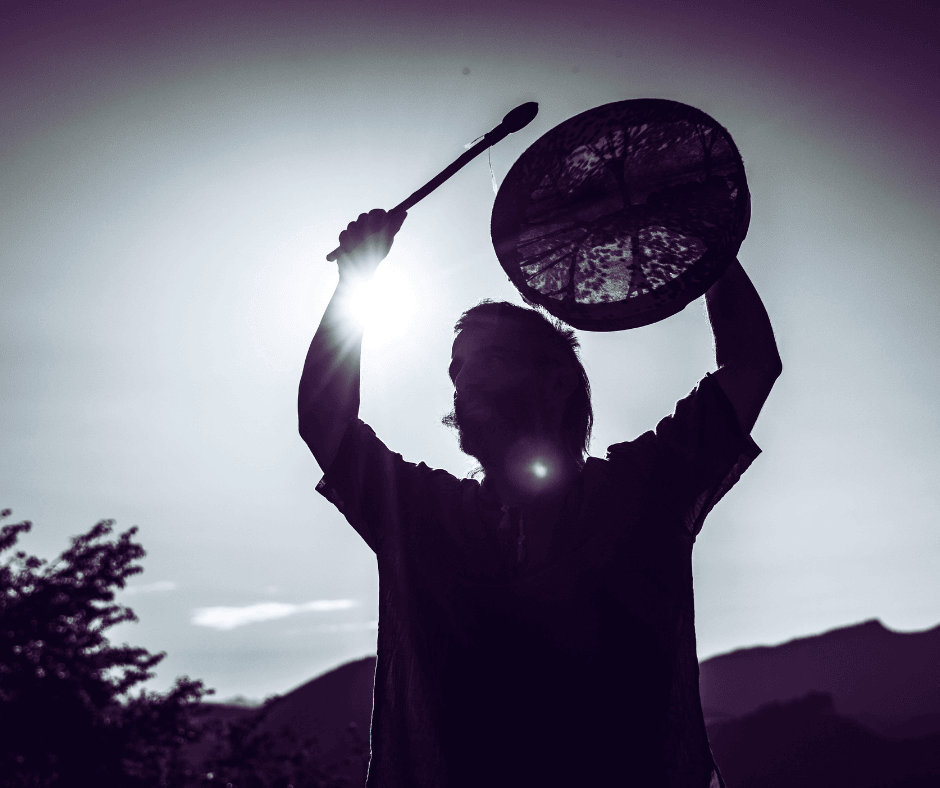
The practitioner prepares the space using traditional tools such as a shamanic drum, rattle, and sacred smoke. The steady rhythm of the drum supports entry into a trance state, allowing access to deeper layers of awareness.
Clients remain fully clothed and often lie comfortably throughout the session. Afterward, time is given to discuss the experience and any impressions that surfaced.
Shamanic healing sessions at Zen Zone FL Wellness Center follow a structured journey process rooted in established shamanic traditions. The practitioner enters an altered state of consciousness through the steady rhythmic beat of the shamanic drum. This trance state allows access to the Lower World, Middle World, and Upper World, where healing information and guidance are received.
These worlds are not symbolic metaphors. In shamanism, they represent distinct levels of perception accessed during shamanic journeying. Helping spirits and spirit guides are consulted to support soul retrieval, spiritual extraction, and ancestral healing work. The practitioner acts as an intermediary, ensuring the process remains focused and contained.
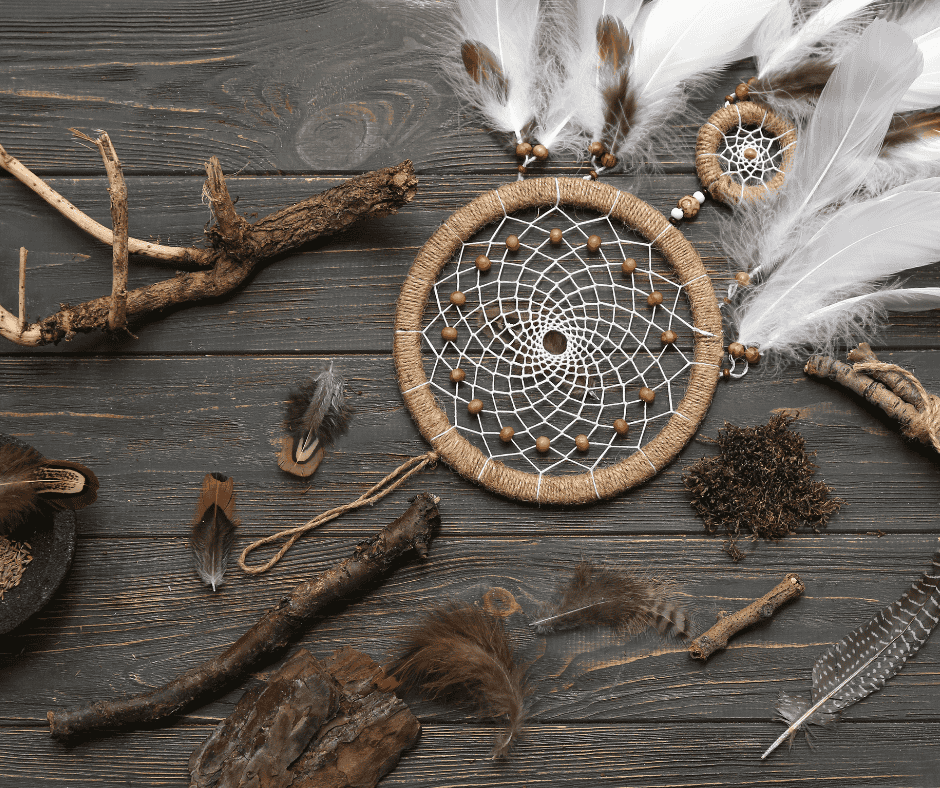
Traditional tools are used with intention rather than ritual display. A shamanic drum or rattle establishes rhythm and focus. Sacred smoke from sage or palo santo is used to clear the energetic field. Eagle feathers, crystals, and a mesa altar may be present to anchor the work and support energetic balance.
Zen Zone practitioners are trained to work within these frameworks with discernment. The goal is not ceremony for its own sake, but precise energetic intervention that supports clarity, grounding, and emotional stability.
The shamanic healing work offered in Hallandale Beach is informed by recognized schools of energy medicine. These include teachings associated with the Foundation for Shamanic Studies, as well as methods popularized through practitioners such as Sandra Ingerman and lineages connected to Andean energy medicine.
Some sessions may incorporate principles aligned with Munay-Ki rites or Four Winds style frameworks, adapted carefully to the individual rather than applied universally. This ensures the work remains respectful, trauma-aware, and appropriate for modern wellness seekers.
Training in indigenous lineage traditions emphasizes responsibility, grounding, and ethical clarity. Shamanic healing at Zen Zone is positioned as professional spiritual care rather than abstract mysticism.
Zen Zone FL Wellness Center serves as a spiritual healing hub for Hallandale Beach and surrounding areas. Clients from the 33009, 33008, 33160, and 33020 zip codes seek shamanic healing sessions that are private, structured, and deeply restorative.
The location within Atlantic Village provides discreet access for residents of Golden Isles, Three Islands, and nearby luxury residences in Sunny Isles Beach and Hollywood. Many clients value the ability to receive advanced shamanic energy healing without traveling outside South Florida.
This accessibility supports ongoing work rather than one-time experiences. Clients can integrate shamanic healing into a broader wellness rhythm while remaining grounded in daily life.
Ancestral healing is an important dimension of shamanic work. Emotional and energetic patterns can pass through generations, shaping beliefs, reactions, and life choices without conscious awareness.
These patterns may appear as repeated struggles, persistent emotional themes, or a sense of carrying weight that does not fully belong to the individual. Shamanic healing allows these inherited influences to be acknowledged and released.
Clients often describe a sense of relief and clarity after ancestral work. Many feel more rooted in their own identity and less influenced by unresolved family history.

Hallandale Beach provides a unique backdrop for this work. Zen Zone is located in Atlantic Village, offering a calm sanctuary near Hallandale Beach Boulevard and Federal Highway. The setting balances accessibility with privacy.
Clients from Golden Isles, Three Islands, and Diplomat Golf Estates appreciate the quiet atmosphere. Many arrive from nearby high-rise residences in Sunny Isles or Hollywood seeking a refined and grounded healing space.
Shamanic healing at Zen Zone is practiced by certified practitioners with extensive training in energy medicine traditions. Influences may include Andean or Amazonian lineages and modern shamanic schools that emphasize ethical clarity.
Trauma-informed awareness is central to the work. Sessions are conducted with respect for personal boundaries and emotional readiness. This professional grounding ensures that healing unfolds at a pace appropriate for each client.
Integration is an essential part of shamanic healing. After a session, clients may notice subtle changes in mood, perception, or emotional resilience. These shifts often continue to unfold over time.
Zen Zone supports this process through reflection and optional integration coaching. Clients are encouraged to observe how insights show up in daily life rather than rushing toward conclusions.
Shamanic healing is not positioned as a single event, but as part of a broader wellness journey. Some clients return periodically, while others find that a small number of sessions creates lasting change.
Shamanic healing often resonates with individuals who are outwardly capable yet inwardly searching. Many clients are professionals, creatives, or caregivers who manage high responsibility while neglecting their inner needs.
Those who feel ready to explore healing beyond conventional approaches often find this work both grounding and expansive.
Zen Zone FL Wellness Center offers shamanic healing sessions designed for those seeking meaningful transformation. Each session is guided with care, discretion, and respect for the client's pace. Select experiences may also include a cacao ceremony in Hallandale Beach , used intentionally to support emotional openness, grounding, and heart-centered awareness before or after the healing work.
A new client spiritual assessment or comprehensive soul map session provides a thoughtful starting point. This process allows the practitioner to align the work with personal history, goals, and readiness.
For those in Hallandale Beach and surrounding communities who feel called to reconnect with themselves on a deeper level, shamanic healing offers a calm and compassionate path forward. Booking a session is an invitation to restore balance, clarity, and inner presence.
 |

| Part of a series on |
| Anthropology of religion |
|---|
 |
| Social and cultural anthropology |
| Part of a series on |
| Alternative medicine |
|---|
 |
Shamanism is a spiritual practice that involves a practitioner (shaman) interacting with the spirit world through altered states of consciousness, such as trance.[4][5] The goal of this is usually to direct spirits or spiritual energies into the physical world for the purpose of healing, divination, or to aid human beings in some other way.[4][6]
Beliefs and practices categorized as shamanic have attracted the interest of scholars from a variety of disciplines, including anthropologists, archeologists, historians, religious studies scholars, philosophers, and psychologists. Hundreds of books and academic papers on the subject have been produced, with a peer-reviewed academic journal being devoted to the study of shamanism.

The Modern English word shamanism derives from the Russian word шаман, šamán, which itself comes from the word samān from a Tungusic language[8] – possibly from the southwestern dialect of the Evenki spoken by the Sym Evenki peoples,[9] or from the Manchu language.[10] The etymology of the word is sometimes connected to the Tungus root sā-, meaning "to know".[11][12] However, Finnish ethnolinguist Juha Janhunen questions this connection on linguistic grounds: "The possibility cannot be completely rejected, but neither should it be accepted without reservation since the assumed derivational relationship is phonologically irregular (note especially the vowel quantities)."[13]
Mircea Eliade noted that the Sanskrit word श्रमण, śramaṇa, designating a wandering monastic or holy figure, has spread to many Central Asian languages along with Buddhism and could be the ultimate origin of the word shaman.[14] The word has been reported in Gandhari as ṣamana, in Tocharian A as ṣāmaṃ, in Tocharian B as ṣamāne and in Chinese as 沙門, shāmén.[15]
The term was adopted by Russians interacting with the indigenous peoples in Siberia. It is found in the memoirs of the exiled Russian churchman Avvakum.[16] It was brought to Western Europe twenty years later by the Dutch statesman Nicolaes Witsen, who reported his stay and journeys among the Tungusic- and Samoyedic-speaking Indigenous peoples of Siberia in his book Noord en Oost Tataryen (1692).[7] Adam Brand, a merchant from Lübeck, published in 1698 his account of a Russian embassy to China; a translation of his book, published the same year, introduced the word shaman to English speakers.[17]
Anthropologist and archeologist Silvia Tomášková argued that by the mid-1600s, many Europeans applied the Arabic term shaitan (meaning "devil") to the non-Christian practices and beliefs of Indigenous peoples beyond the Ural Mountains.[18] She suggests that shaman may have entered the various Tungus dialects as a corruption of this term, and then been told to Christian missionaries, explorers, soldiers and colonial administrators with whom the people had increasing contact for centuries.
A female shaman is sometimes called a shamanka, which is not an actual Tungus term but simply shaman plus the Russian suffix -ka (for feminine nouns).[19]
There is no single agreed-upon definition for the word "shamanism" among anthropologists. Anthropologist Manvir Singh argues that the most justifiable definition includes three basic features: entering non-ordinary states, engaging with unseen realities, and providing services like healing and divination.[4][20]
The English historian Ronald Hutton noted that by the dawn of the 21st century, there were four separate definitions of the term which appeared to be in use:[21]
According to the Oxford English Dictionary, a shaman (/ˈʃɑːmən/ SHAH-mən, /ˈʃæmən/ SHAM-ən or /ˈʃeɪmən/ SHAY-mən)[22] is someone who is regarded as having access to, and influence in, the world of benevolent and malevolent spirits, who typically enters into a trance state during a ritual, and practices divination and healing.[6][22] The word "shaman" probably originates from the Tungusic Evenki language of North Asia. According to Juha Janhunen, "the word is attested in all of the Tungusic idioms" such as Negidal, Lamut, Udehe/Orochi, Nanai, Ilcha, Orok, Manchu and Ulcha, and "nothing seems to contradict the assumption that the meaning 'shaman' also derives from Proto-Tungusic" and may have roots that extend back in time at least two millennia.[23] The term was introduced to the west after Russian forces conquered the shamanistic Khanate of Kazan in 1552.
The term "shamanism" was first applied by Western anthropologists as outside observers of the ancient religion of indigenous Siberians and Mongols, as well as those of the neighbouring Tungusic- and Samoyedic-speaking peoples. Upon observing more religious traditions around the world, some Western anthropologists began to also use the term in a very broad sense. The term was used to describe unrelated magicoreligious practices found within the ethnic religions of other parts of Asia, Africa, Australasia and even completely unrelated parts of the Americas, as they believed these practices to be similar to one another.[24] While the term has been incorrectly applied by cultural outsiders to many Indigenous spiritual practices, the words "shaman" and "shamanism" do not accurately describe the variety and complexity that is Indigenous spirituality. Each nation and tribe has its own way of life, and uses terms in their own languages.[25]
Mircea Eliade writes, "A first definition of this complex phenomenon, and perhaps the least hazardous, will be: shamanism = 'technique of religious ecstasy'."[26] Shamanism encompasses the premise that shamans are intermediaries or messengers between the human world and the spirit worlds. Shamans are said to treat ailments and illnesses by mending the soul. Alleviating traumas affecting the soul or spirit are believed to restore the physical body of the individual to balance and wholeness. Shamans also say that they enter supernatural realms or dimensions to obtain solutions to problems afflicting the community, or visit other worlds or dimensions to bring guidance to misguided souls and to ameliorate illnesses of the human soul caused by foreign elements. Shamans operate primarily within the spiritual world, which, they believe, in turn affects the human world. The restoration of balance is said to result in the elimination of the ailment.[26]

The anthropologist Alice Kehoe criticizes the term "shaman" in her book Shamans and Religion: An Anthropological Exploration in Critical Thinking. Part of this criticism involves the notion of cultural appropriation.[27] This includes criticism of New Age and modern Western forms of shamanism, which, according to Kehoe, misrepresent or dilute Indigenous practices. Kehoe also believes that the term reinforces racist ideas such as the noble savage.
Kehoe is highly critical of Mircea Eliade's work on shamanism as an invention synthesized from various sources unsupported by more direct research. To Kehoe, citing practices such as drumming, trance, chanting, entheogen and hallucinogen use, spirit communication, and healing as definitive of shamanism ignores the fact that they exist outside of what is defined as shamanism and even play similar roles in nonshamanic cultures, for example chanting in the Abrahamic religions. She argues that these expressions are unique to each culture that uses them and that such practices cannot be generalized easily, accurately, or usefully into a global religion of shamanism. Because of this, Kehoe is also highly critical of the hypothesis that shamanism is an ancient, unchanged, and surviving religion from the Paleolithic period.[27]
The term has been criticized[by whom?] for its perceived colonial roots, and as a tool to perpetuate perceived contemporary linguistic colonialism. By Western scholars, the term "shamanism" is used to refer to a variety of different cultures and practices around the world, which can vary dramatically and may not be accurately represented by a single concept. Billy-Ray Belcourt, an author and award-winning scholar from the Driftpile Cree Nation in Canada, argues that using language with the intention of simplifying culture that is diverse, such as Shamanism, as it is prevalent in communities around the world and is made up of many complex components, works to conceal the complexities of the social and political violence that Indigenous communities have experienced at the hands of settlers.[28] Belcourt argues that language used to imply "simplicity" in regards to Indigenous culture, is a tool used to belittle Indigenous cultures, as it views Indigenous communities solely as a result of a history embroiled in violence, that leaves Indigenous communities only capable of simplicity and plainness.
Anthropologist Mihály Hoppál also discusses whether the term "shamanism" is appropriate. He notes that for many readers, "-ism" implies a particular dogma, like Buddhism, Catholicism or Judaism. He recommends using the term "shamanhood"[29] or "shamanship"[30] (a term used in old Russian and German ethnographic reports at the beginning of the 20th century) for stressing the diversity and the specific features of the discussed cultures. He believes that this places more stress on the local variations[11] and emphasizes that shamanism is not a religion of sacred dogmas, but linked to the everyday life in a practical way.[31] Following similar thoughts, he also conjectures a contemporary paradigm shift.[29] Piers Vitebsky also mentions that, despite really astonishing similarities, there is no unity in shamanism. The various, fragmented shamanistic practices and beliefs coexist with other beliefs everywhere. There is no record of pure shamanistic societies (although their existence is not impossible).[32] Norwegian social anthropologist Hakan Rydving has likewise argued for the abandonment of the terms "shaman" and "shamanism" as "scientific illusions".[33]
Dulam Bumochir has affirmed the above critiques of "shamanism" as a Western construct created for comparative purposes and, in an extensive article, has documented the role of Mongols themselves, particularly "the partnership of scholars and shamans in the reconstruction of shamanism" in post-1990/post-communist Mongolia.[34] This process has also been documented by Swiss anthropologist Judith Hangartner in her landmark study of Darhad shamans in Mongolia.[35] Historian Karena Kollmar-Polenz argues that the social construction and reification of shamanism as a religious "other" actually began with the 18th-century writings of Tibetan Buddhist monks in Mongolia and later "probably influenced the formation of European discourse on Shamanism".[36]
Shamanism is a system of religious practice.[37] Historically, it is often associated with Indigenous and tribal societies, and involves belief that shamans, with a connection to the otherworld, have the power to heal the sick, communicate with spirits, and escort souls of the dead to the afterlife. The origins of Shamanism stem from Mongolia and indigenous peoples of far northern Europe and Siberia.[38]
Despite structural implications of colonialism and imperialism that have limited the ability of Indigenous peoples to practice traditional spiritualities, many communities are undergoing resurgence through self-determination[39] and the reclamation of dynamic traditions.[40] Other groups have been able to avoid some of these structural impediments by virtue of their isolation, such as the nomadic Tuvan (with an estimated population of 3000 people surviving from this tribe).[41] Tuva is one of the most isolated Asiatic tribes in Russia where the art of shamanism has been preserved until today due to its isolated existence, allowing it to be free from the influences of other major religions.[42]
| Part of a series on |
| Witchcraft |
|---|
 |
There are many variations of shamanism throughout the world, but several common beliefs are shared by all forms of shamanism. Common beliefs identified by Eliade (1972) are the following:[26]
Shamanism is based on the premise that the visible world is pervaded by invisible forces or spirits which affect the lives of the living.[43] Although the causes of disease lie in the spiritual realm, inspired by malicious spirits, both spiritual and physical methods are used to heal. Commonly, a shaman "enters the body" of the patient to confront the spiritual infirmity and heals by banishing the infectious spirit.
Many shamans have expert knowledge of medicinal plants native to their area, and an herbal treatment is often prescribed. In many places shamans learn directly from the plants, harnessing their effects and healing properties, after obtaining permission from the indwelling or patron spirits. In the Peruvian Amazon Basin, shamans and curanderos use medicine songs called icaros to evoke spirits. Before a spirit can be summoned it must teach the shaman its song.[43] The use of totemic items such as rocks with special powers and an animating spirit is common.
Belief in witchcraft and sorcery, known as brujería in Latin America, exists in many societies. Other societies assert all shamans have the power to both cure and kill. Those with shamanic knowledge usually enjoy great power and prestige in the community, but they may also be regarded suspiciously or fearfully as potentially harmful to others.[44]
Generally, shamans traverse the axis mundi and enter the "spirit world" by effecting a transition of consciousness, entering into an ecstatic trance, either autohypnotically or through the use of entheogens or ritual performances.[55] The methods employed are diverse, and are often used together.
Just like shamanism itself,[11] music and songs related to it in various cultures are diverse. In several instances, songs related to shamanism are intended to imitate natural sounds, via onomatopoeia.[56]
Sound mimesis in various cultures may serve other functions not necessarily related to shamanism: practical goals such as luring game in the hunt;[57] or entertainment (Inuit throat singing).[57][58]
Shamans often say that they have been called through dreams or signs. However, some say their powers are inherited. In traditional societies shamanic training varies in length, but generally takes years.
Turner and colleagues mention a phenomenon called "shamanistic initiatory crisis",[59] a rite of passage for shamans-to-be, commonly involving physical illness or psychological crisis. The significant role of initiatory illnesses in the calling of a shaman can be found in the case history of Chuonnasuan, who was one of the last shamans among the Tungus peoples in Northeast China.[60]
The wounded healer is an archetype for a shamanic trial and journey. This process is important to young shamans. They undergo a type of sickness that pushes them to the brink of death. This is said to happen for two reasons:[61]

Shamans may employ varying materials in spiritual practice in different cultures.
The drum is used by shamans of several peoples in Siberia.[62] The beating of the drum allows the shaman to achieve an altered state of consciousness or to travel on a journey between the physical and spiritual worlds. Much fascination surrounds the role that the acoustics of the drum play to the shaman. Shaman drums are generally constructed of an animal-skin stretched over a bent wooden hoop, with a handle across the hoop.


Shamans have been conceptualized as those who are able to gain knowledge and power to heal in the spiritual world or dimension. Most shamans have dreams or visions that convey certain messages. Shamans may say that they have or have acquired many spirit guides, who they believe guide and direct them in their travels in the spirit world. These spirit guides are always thought to be present within the shaman, although others are said to encounter them only when the shaman is in a trance. The spirit guide energizes the shamans, enabling them to enter the spiritual dimension. Shamans say that they heal within the communities and the spiritual dimension by returning lost parts of the human soul from wherever they have gone. Shamans also say that they cleanse excess negative energies, which are said to confuse or pollute the soul. Shamans act as mediators in their cultures.[64][65] Shamans say that they communicate with the spirits on behalf of the community, including the spirits of the deceased. Shamans believe they can communicate with both living and dead to alleviate unrest, unsettled issues, and to deliver gifts to the spirits.
Shamans perform a variety of functions depending upon their respective cultures;[66] healing,[48][67] leading a sacrifice,[68] preserving traditions by storytelling and songs,[69] fortune-telling,[70] and acting as a psychopomp ("guide of souls").[71] A single shaman may fulfill several of these functions.[66]
There are distinct types of shamans who perform more specialized functions. For example, among the Nanai people, a distinct kind of shaman acts as a psychopomp.[72] Other specialized shamans may be distinguished according to the type of spirits, or realms of the spirit world, with which the shaman most commonly interacts. These roles vary among the Nenets, Enets, and Selkup shamans.[73][74]
The assistant of an Oroqen shaman (called jardalanin, or "second spirit") knows many things about the associated beliefs. He or she accompanies the rituals and interprets the behaviors of the shaman.[75] Despite these functions, the jardalanin is not a shaman. For this interpretative assistant, it would be unwelcome to fall into a trance.[76]
As the primary teacher of tribal symbolism, the shaman may have a leading role in this ecological management, actively restricting hunting and fishing. Among the Tucano people, a sophisticated system exists for environmental resources management and for avoiding resource depletion through overhunting. This system is conceptualized mythologically and symbolically by the belief that breaking hunting restrictions may cause illness.[citation needed] The shaman is able to "release" game animals, or their souls, from their hidden abodes.[77][78] The Piaroa people have ecological concerns related to shamanism.[79] Among the Inuit the angakkuq (shamans) fetch the souls of game from remote places,[80][81] or soul travel to ask for game from mythological beings like the Sea Woman.[82]
The way shamans get sustenance and take part in everyday life varies across cultures. In many Inuit groups, they provide services for the community and get a "due payment",[who?] and believe the payment is given to the helping spirits.[83] An account states that the gifts and payments that a shaman receives are given by his partner spirit. Since it obliges the shaman to use his gift and to work regularly in this capacity, the spirit rewards him with the goods that it receives.[84] These goods, however, are only "welcome addenda". They are not enough to enable a full-time shaman. Shamans live like any other member of the group, as a hunter or housewife.
Since the early 2000s, the growth of ayahuasca tourism in South America has created an economic niche for practitioners, particularly in Iquitos, Peru, where retreat centers cater to foreign visitors. Media attention in international outlets further contributed to this trend, and many shamans and facilitators now sustain themselves by leading ceremonies for paying participants.[85][86][87]
Furthermore, due to the predominant number of female shamans over males, shamanism was and continues to be an integral part of women's economic liberation.[citation needed] Shamanism often serves as an economic resource due to the requirement of payment for service. This economic revenue was vital for female shamans, especially those living during the Chosun Dynasty in Korea (A.D. 1392–1910). In a culture that disapproved of female economic autonomy, the practice of shamanism allowed women to advance themselves financially and independently, in a way that had not been possible for them before.[88]

There are two major frameworks among cognitive and evolutionary scientists for explaining shamanism. The first, proposed by anthropologist Michael Winkelman, is known as the "neurotheological theory".[89][90] According to Winkelman, shamanism develops reliably in human societies because it provides valuable benefits to the practitioner, their group, and individual clients. In particular, the trance states induced by dancing, hallucinogens, and other triggers are hypothesized to have an "integrative" effect on cognition, allowing communication among mental systems that specialize in theory of mind, social intelligence, and natural history.[91] With this cognitive integration, the shaman can better predict the movement of animals, resolve group conflicts, plan migrations, and provide other useful services.
| Part of a series on |
| Magic |
|---|
 |
The neurotheological theory contrasts with the "by-product" or "subjective" model of shamanism developed by anthropologist Manvir Singh.[4][6][92][93] According to Singh, shamanism is a cultural technology that adapts to (or hacks) our psychological biases to convince us that a specialist can influence important but uncontrollable outcomes.[94] Citing work on the psychology of magic and superstition, Singh argues that humans search for ways of influencing uncertain events, such as healing illness, controlling rain, or attracting animals. As specialists compete to help their clients control these outcomes, they drive the evolution of psychologically compelling magic, producing traditions adapted to people's cognitive biases. Shamanism, Singh argues, is the culmination of this cultural evolutionary process—a psychologically appealing method for controlling uncertainty. For example, some shamanic practices exploit our intuitions about humanness: Practitioners use trance and dramatic initiations to seemingly become entities distinct from normal humans and thus more apparently capable of interacting with the invisible forces believed to oversee important outcomes. Influential cognitive and anthropological scientists, such as Pascal Boyer and Nicholas Humphrey, have endorsed Singh's approach,[95][96] although other researchers have criticized Singh's dismissal of individual- and group-level benefits.[97]
Gerardo Reichel-Dolmatoff relates these concepts to developments in the ways that modern science (systems theory, ecology, new approaches in anthropology and archeology) treats causality in a less linear fashion.[77] He also suggests a cooperation of modern science and Indigenous lore.[77]
Some scholars suggest that shamanic practices may originate as early as the Paleolithic, predating all organized religions,[98][99][100] and at least as early as the Neolithic period.[100] The earliest burial interpreted by some researchers as that of a shaman (and by extension the earliest supposed evidence of shamans and shamanic practices) dates back to the early Upper Paleolithic era (c. 30,000 BP) in what is now the Czech Republic.[101]
One influential but debated theory proposed by Sanskrit scholar and comparative mythologist Michael Witzel suggests that all of the world's mythologies, and also the concepts and practices of shamans, can be traced to the migrations of two prehistoric populations: the "Gondwana" type (of circa 65,000 years ago) and the "Laurasian" type (of circa 40,000 years ago).[102]
In November 2008, researchers from the Hebrew University of Jerusalem announced the discovery of a 12,000-year-old site in Israel that is perceived as one of the earliest-known shaman burials. The elderly woman had been arranged on her side, with her legs apart and folded inward at the knee. Ten large stones were placed on the head, pelvis, and arms. Among her unusual grave goods were 50 complete tortoise shells, a human foot, and certain body parts from animals such as a cow tail and eagle wings. Other animal remains came from a boar, leopard, and two martens. "It seems that the woman … was perceived as being in a close relationship with these animal spirits", the researchers wrote. The grave was one of at least 28 graves at the site, located in a cave in lower Galilee and belonging to the Natufian culture, but is said to be unlike any other among the Epipaleolithic Natufians or in the Paleolithic period.[103]
A debated etymology of the word "shaman" is "one who knows",[12][104] implying, among other things, that the shaman is an expert in keeping together the multiple codes of the society, and that to be effective, shamans must maintain a comprehensive view in their mind which gives them certainty of knowledge.[11] According to this view, the shaman uses (and the audience understands) multiple codes, expressing meanings in many ways: verbally, musically, artistically, and in dance. Meanings may be manifested in objects such as amulets.[104] If the shaman knows the culture of their community well,[65][105][106] and acts accordingly, their audience will know the used symbols and meanings and therefore trust the shamanic worker.[106]
There are also semiotic, theoretical approaches to shamanism,[107][108] and examples of "mutually opposing symbols" in academic studies of Siberian lore, distinguishing a "white" shaman who contacts sky spirits for good aims by day, from a "black" shaman who contacts evil spirits for bad aims by night.[109] (Series of such opposing symbols referred to a world-view behind them. Analogously to the way grammar arranges words to express meanings and convey a world, also this formed a cognitive map).[11][110] Shaman's lore is rooted in the folklore of the community, which provides a "mythological mental map".[111][112] Juha Pentikäinen uses the concept "grammar of mind".[112][113]
Armin Geertz coined and introduced the hermeneutics,[114] or "ethnohermeneutics",[110] interpretation. Hoppál extended the term to include not only the interpretation of oral and written texts, but that of "visual texts as well (including motions, gestures and more complex rituals, and ceremonies performed, for instance, by shamans)".[115] Revealing the animistic views in shamanism, but also their relevance to the contemporary world, where ecological problems have validated paradigms of balance and protection.[112]
In many societies where shamanism is practiced, the understanding and treatment of illness are closely tied to social and cultural processes. Disease is often seen not just as a biological condition but as a disruption in the balance of spiritual and social relationships. The concept of the body in these contexts is multifaceted, encompassing physical, social, and cultural dimensions.[116] Anthropologists Nancy Scheper-Hughes and Margaret Lock expand on this by introducing the idea of "the three bodies": the "individual body", relating to personal health experiences; the "social body", connecting health to social and cultural values; and the "body politic", reflecting the influence of power structures on health outcomes.[117]
According to anthropologist Donald Joralemon, the practice of medicine is inherently a social process, both in shamanistic societies and contemporary biomedicine.[116] Joralemon argues that healing rituals, diagnoses, and treatments are deeply embedded in the cultural norms and social expectations of a community. This is particularly evident in shamanism, where the shaman addresses not only physical symptoms but also the spiritual and communal aspects of illness. The shaman's role is to restore harmony within the individual and the community, reinforcing the social bonds believed to influence health. Joralemon emphasizes that in both traditional and modern medical practices, disease is not merely a biological fact but a social phenomenon, shaped by the cultural and societal contexts in which it occurs .[116]
Where a Shaman is present within a community - the group determines whether an individual is true Shaman or not. The group also determines whether an individual is sick and doomed by sorcery, this is where a Shaman is given the role to dispel an illness. The Shaman does not become a great Shaman because they cure a person, it is because they are known by the group as great Shamans. Community members known as dreamers also listen in on private conversations to convey an individual's known sickness.[118]
According to Vine DeLoria, the American Indian shaman who couldn't heal, weren't the great ones: a healer is a medicine person, & that is a cut above a mere shaman.

Traditional, Indigenous shamanism is believed to be declining around the world. Whalers who frequently interacted with Inuit groups are one source of this decline in that region.[121] In many areas, former shamans ceased to fulfill the functions in the community they used to, as they felt mocked by their own community,[122] or regarded their own past as deprecated and were unwilling to talk about it to ethnographers.[123] Vine DeLoria noted that in the Americas, the Whites wouldn't call shaman either shaman or medicine-men/people ( back then, the term was sexist ), they would call them, instead, the derogatory "jugglers", asserting that they were just fakers, even when they couldn't fathom how any of their work that they had just seen, could possibly have been faked.
Besides personal communications of former shamans, folklore texts may narrate directly about a deterioration process. For example, a Buryat epic text details the wonderful deeds of the ancient "first shaman" Kara-Gürgän:[124] he could even compete with God, create life, steal back the soul of the sick from God without his consent. A subsequent text laments that shamans of older times were stronger, possessing capabilities like omnividence,[125] fortune-telling even for decades in the future, moving as fast as a bullet.[126]
In most affected areas, shamanic practices ceased to exist, with authentic shamans dying and their personal experiences dying with them. The loss of memories is not always lessened by the fact the shaman is not always the only person in a community who knows the beliefs and motives related to the local shaman-hood.[127] Although the shaman is often believed and trusted precisely because they "accommodate" to the beliefs of the community,[106] several parts of the knowledge related to the local shamanhood consist of personal experiences of the shaman, or root in their family life,[128] thus, those are lost with their death. Besides that, in many cultures, the entire traditional belief system has become endangered (often together with a partial or total language shift), with the other people of the community remembering the associated beliefs and practices (or the language at all) grew old or died, many folklore memories, songs, and texts were forgotten—which may threaten even such peoples who could preserve their isolation until the middle of the 20th century, like the Nganasan.[129]
Some areas could enjoy a prolonged resistance due to their remoteness.
After exemplifying the general decline even in the most remote areas, there are revitalizations or tradition-preserving efforts as a response. Besides collecting the memories,[134] there are also tradition-preserving[135] and even revitalization efforts,[136] led by authentic former shamans (for example among the Sakha people[137] and Tuvans).[120]
Native Americans in the United States do not call their traditional spiritual ways "shamanism". However, according to Richard L. Allen, research and policy analyst for the Cherokee Nation, they are regularly overwhelmed with inquiries by and about fraudulent shamans, (aka "plastic medicine people").[138] He adds, "One may assume that anyone claiming to be a Cherokee 'shaman, spiritual healer, or pipe-carrier', is equivalent to a modern day medicine show and snake-oil vendor."[139]
Shamanism, religious phenomenon centred on the shaman, a person believed to achieve various powers through trance or ecstatic or unifying, religious experience. Although shamans' repertoires vary from one culture to the next, they are typically thought to have the ability to heal the sick, to communicate with the otherworld, and often to escort the souls of the dead to that otherworld.
The terms shaman and the Russianized feminine form shamanka, 'shamaness', 'seeress', are in general use to denote any persons of the Native professional class among the heathen Siberians and Tatars generally, and there can be no doubt that they have come to be applied to a large number of different classes of people.
cite book: ISBN / Date incompatibility (help)cite book: ISBN / Date incompatibility (help)cite book: ISBN / Date incompatibility (help)


| Subgenres |
|
||||||||||
|---|---|---|---|---|---|---|---|---|---|---|---|
| Media |
|
||||||||||
| Awards | |||||||||||
| Fandom |
|
||||||||||
| Tropes |
|
||||||||||
| Related | |||||||||||
| International | |
|---|---|
| National | |
| Other | |
Redirect to:
|
This page is a redirect. The following categories are used to track and monitor this redirect:
|


