Why Phoenix Commercial Rooftop Units Fail Faster Than Almost Anywhere in America

Why Phoenix Commercial Rooftop Units Fail Faster Than Almost Anywhere in America

Walk the roof of any mid-rise office building on Camelback Road, any single-story retail strip along 7th Street, or any restaurant in the Biltmore area on a July afternoon and the surface temperature under your feet is not air temperature. It is closer to 170 degrees Fahrenheit. The rooftop packaged unit sitting on that surface is absorbing radiant heat from below while the ambient air temperature above it exceeds 115 degrees. Inside the unit, the compressor is operating at discharge temperatures that approach the upper boundary of its rated envelope, the capacitor is thermal-cycling through its maximum rated range for the fifth hour in a row, and the condenser fan motor is moving air that is already too hot to provide meaningful cooling of the refrigerant it is supposed to reject heat into.

This is the operating reality of commercial rooftop HVAC in Phoenix, Arizona. It is not comparable to Chicago, Dallas, Atlanta, or any other major American commercial market. Phoenix is in a category by itself, and the failure rates that commercial property managers, facility directors, and business owners experience here reflect that distinction directly.

RTUs Cool 70 Percent of Commercial Space in America

According to industry data, rooftop packaged units serve approximately 70 percent of the cooled commercial floor space in North America, equating to nearly 40 billion square feet. This dominance is particularly concentrated in Phoenix, where the flat-roof single-story commercial building typology that defines the Valley's retail, restaurant, and office corridors was designed around rooftop-mounted systems from the ground up, making RTU performance and reliability a direct determinant of business continuity across Maricopa County.

RTUs Last 15 to 20 Years Under Normal Conditions

US Department of Energy data and published specifications from commercial equipment manufacturers including Trane and Carrier place the expected service life of a properly maintained commercial rooftop unit at 15 to 20 years under typical operating conditions. The critical qualifier is operating conditions. Phoenix's 115-degree summer ambient temperatures and sustained rooftop surface heat loads place RTUs in a category that manufacturers themselves classify as severe duty, which is why Phoenix property managers who apply the national lifespan standard to their equipment routinely encounter compressor failures and major electrical component replacement needs eight to twelve years into service.

Commercial RTUs Consume More Energy Than Any Other Cooling Technology

Research cited by the US Department of Energy's commercial buildings program documents that rooftop air conditioning units consume more energy than any other type of commercial cooling technology in the United States, approximately 4.3 quads per year, which is the equivalent of 34 billion gallons of gasoline. In Phoenix, where RTUs run at near-maximum output for five to six consecutive months annually, the energy consumption per unit substantially exceeds the national average, which is why the efficiency gap between a degraded 10-year-old Phoenix RTU and a new high-SEER2 replacement unit translates directly into measurable monthly operating cost savings that partially offset the capital cost of replacement.

What Makes a Phoenix Rooftop Different From Every Other Market

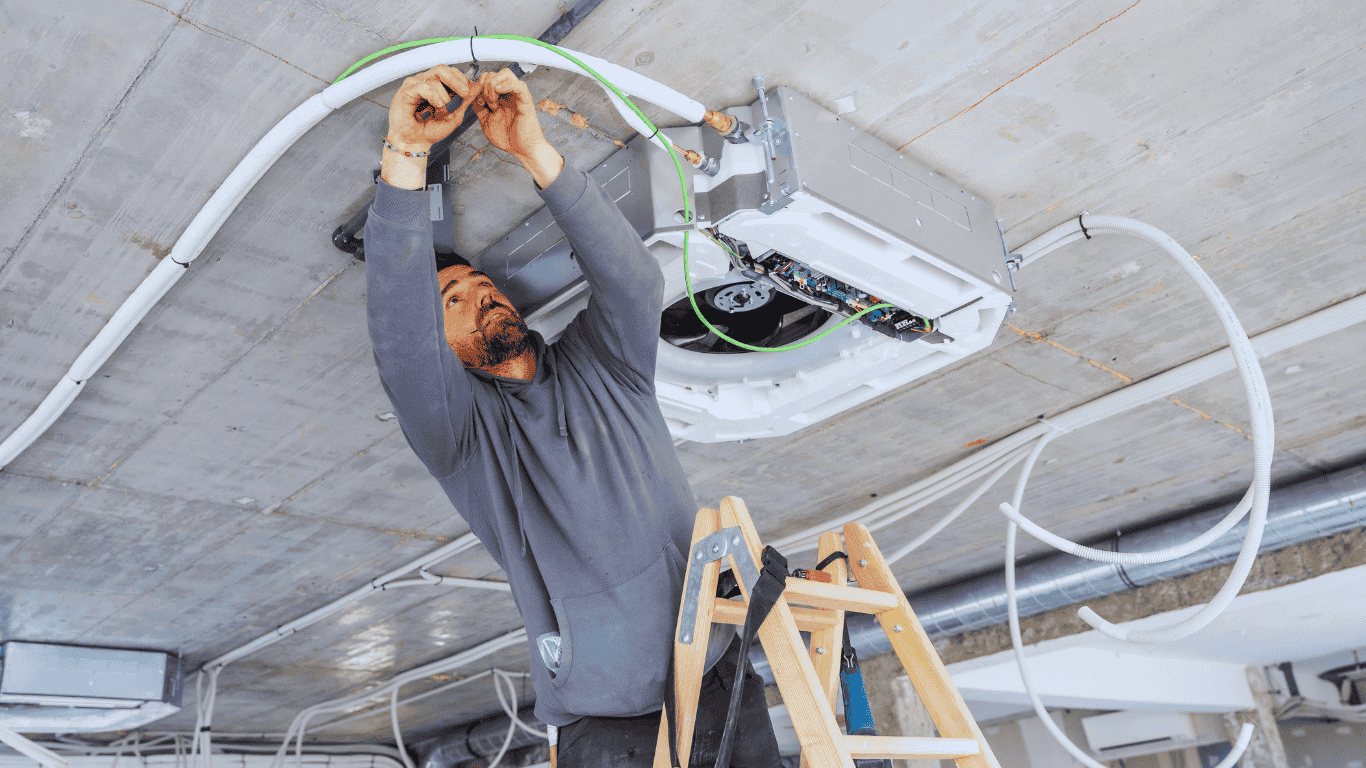
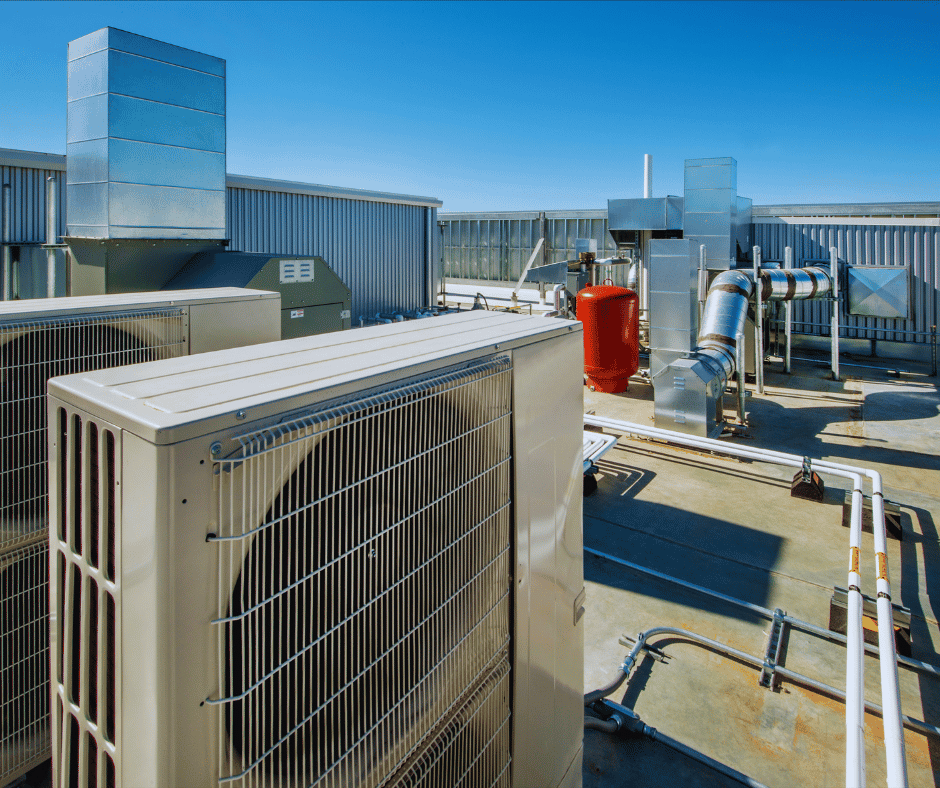
A rooftop packaged unit, commonly called an RTU, is a self-contained commercial HVAC system that houses the compressor, condenser coil, condenser fan, evaporator coil, blower, and controls in a single cabinet mounted on the building roof. RTUs dominate Phoenix's commercial building stock because the flat-roof, single-story construction that characterizes most Valley retail, restaurant, medical office, and light commercial real estate is designed around them. The Camelback Corridor, the commercial districts of Downtown Phoenix, the retail corridors in Arcadia and the Desert Ridge area, and the business parks around Phoenix Sky Harbor Airport are all predominantly rooftop-served buildings.

In most American cities, a commercial RTU operates at or below its design ambient temperature for the majority of the year. The equipment manufacturers publish performance ratings at a standard outdoor design condition of 95 degrees Fahrenheit. Phoenix regularly exceeds that standard by 15 to 20 degrees during peak summer months, and the rooftop surface beneath the unit adds another 40 to 60 degrees of radiant heat load on top of the ambient air temperature. The RTU's condenser section is physically incapable of rejecting heat as efficiently at 115-degree ambient conditions as the published efficiency ratings describe, which means the unit works harder, draws more current, and runs longer to achieve the same cooling result. That additional runtime accumulates across the entire Phoenix summer into a compression of equipment service life that has no equivalent in any other major American metro.

The Compressor Failure Curve in Phoenix Commercial Buildings

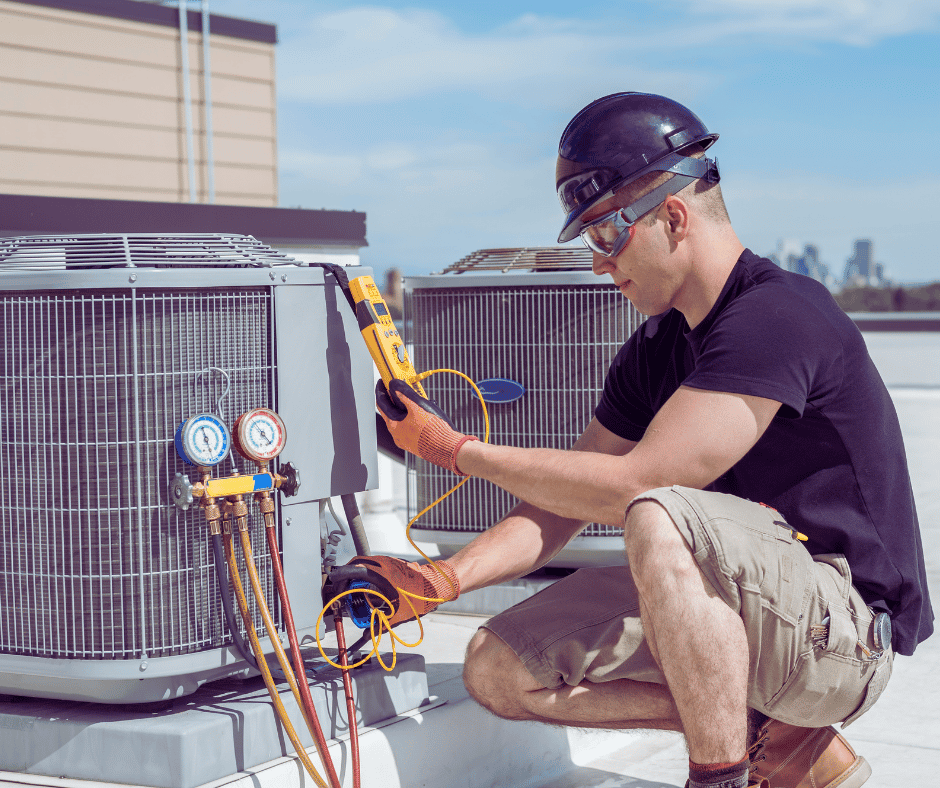
A commercial RTU compressor in Phoenix operates at a meaningfully higher discharge temperature than the same compressor in a moderate climate. Discharge temperature is the temperature of the refrigerant gas leaving the compressor outlet after compression. At high ambient conditions, the condensing temperature rises because the condenser cannot reject heat fast enough to keep pace with the compression cycle, which elevates discharge temperature further. When discharge temperatures consistently approach or exceed the compressor manufacturer's maximum rated value, the oil viscosity in the compressor crankcase changes, lubrication becomes less effective, and bearing wear accelerates. The result is a compressor that reaches its mechanical failure threshold at eight to ten years in Phoenix rather than the fifteen to twenty years the same model achieves in a moderate climate.

Property managers in Phoenix zip codes 85004, 85012, and 85013 managing commercial buildings on the north and east sides of Downtown Phoenix or along the Camelback Corridor encounter this failure timeline routinely. A ten-year-old RTU in these locations is not a mid-life system. It is an aging system operating in a failure window that justifies replacement evaluation, not continued repair investment. The conventional wisdom applied in other markets, that an RTU should be repaired unless the repair cost exceeds fifty percent of replacement value, underestimates Phoenix's equipment lifecycle reality because it does not account for the compressed service life the climate produces.

The Capacitor and Contactor Problem Across Phoenix Commercial Properties

The run capacitor is the most frequently replaced component in Phoenix commercial RTUs, and the concentration of commercial capacitor failures during June and July is not random. The run capacitor provides the phase-shifted voltage that the compressor motor and condenser fan motor require to start under load and maintain torque during operation. Capacitors are rated to a maximum operating temperature, and commercial-grade capacitors typically carry ratings between 70 and 85 degrees Celsius. On a Phoenix rooftop in July, the temperature inside the RTU cabinet surrounding the capacitor routinely exceeds those ratings.

Thermal cycling is the primary capacitor failure mechanism in Phoenix. Each day, the capacitor heats to near its rated maximum during operation, then cools overnight, then heats again the following day. This daily thermal cycling degrades the dielectric material inside the capacitor at a rate that is directly proportional to the temperature reached during each cycle. A capacitor that might provide ten years of service in a Chicago commercial building may provide three to five years in a Phoenix rooftop unit running continuous summer cycles at near-maximum temperature. The contactor, which connects line voltage to the compressor and condenser fan, experiences the same thermal degradation at its contact surfaces, producing pitting and oxidation that eventually prevents reliable switching.

For Phoenix commercial property managers, the practical implication is that capacitor and contactor replacement should be built into preventive maintenance schedules every three to four years rather than the every-five-to-seven-year interval that national maintenance standards suggest. Waiting for a capacitor to fail in a Phoenix July means a business operating in a building that may reach 85 degrees indoors within two to three hours of the RTU failing at midday. For a restaurant near the Desert Botanical Garden, a medical office near Banner University Medical Center, or a retail tenant in the Biltmore Fashion Park area, that timeline represents significant revenue exposure.

Monsoon Season and Its Specific Damage to Phoenix Commercial RTUs

Phoenix's monsoon season runs from mid-June through September and introduces a set of failure mechanisms that compound the sustained heat stress the equipment is already managing. Haboob dust storms, which can arrive with wind speeds exceeding 50 miles per hour, drive fine particulate matter into condenser coil fins, blower sections, and electrical compartments of every exposed RTU in the metro. A single dust storm event can reduce condenser coil airflow efficiency by 10 to 15 percent by partially blocking the fin spacing that allows air to pass through the coil face and carry heat away from the refrigerant.

A condenser coil with 15 percent reduced airflow requires the system to run longer to reject the same heat load, which elevates head pressure, increases compressor discharge temperature, and draws more current from the building's electrical supply. Commercial buildings in areas of Phoenix with concentrated dust exposure, including properties near the Arizona State Fairgrounds, along the I-10 corridor through Laveen and South Phoenix, and in the industrial districts near the Phoenix Sky Harbor Airport, experience particularly aggressive condenser fouling that requires professional cleaning after significant storm events rather than on an annual maintenance interval alone.

Monsoon season also brings unexpected electrical events. Lightning strikes near commercial buildings create transient voltage spikes that travel through power distribution and damage RTU control boards, variable frequency drives, and economizer controls. Surge protection at the unit level is standard in commercial RTU installations in Phoenix but is often absent on older equipment that predates current installation practices. A control board failure on a single RTU serving a restaurant kitchen on a busy Friday evening represents a different magnitude of business impact than the same failure on a mild Tuesday in October.

The Hard Water Dimension of Phoenix Commercial Plumbing

Commercial buildings in Phoenix face a plumbing challenge that compounds the HVAC stress described above. Phoenix's municipal water supply, delivered via the Central Arizona Project from the Colorado River, carries some of the highest dissolved mineral content of any major American city's water system. Calcium and magnesium measured in grains per gallon in Phoenix water consistently rate as very hard to extremely hard, which means every water-consuming system in a commercial building is accumulating mineral scale at a rate that accelerates equipment degradation.

Commercial tankless water heaters used in restaurants and medical facilities along the Camelback Corridor and in business parks near Desert Ridge develop scale deposits on heat exchanger surfaces that reduce thermal transfer efficiency. A tankless heater operating with significant scale buildup draws more gas or electricity to heat the same volume of water to the same temperature, reducing energy efficiency while simultaneously stressing the heat exchanger material. Commercial water heater failures in Phoenix buildings frequently trace to scale-induced overheating that a descaling service visit would have prevented.

Restaurant grease traps and commercial drains in the Phoenix metro face a specific seasonal challenge during summer. High ambient temperatures accelerate the biological activity in grease trap contents, which increases the rate of hydrogen sulfide production and produces the sewage odor complaints that restaurant and retail property managers receive from tenants during summer months. Commercial hydro jetting of drain lines and grease trap servicing on a compressed summer schedule, rather than the standard quarterly interval, is the maintenance practice that prevents the drain failure calls that arrive during peak business hours on summer weekends.
Commercial Sewer and Drain Issues in Phoenix's Aging Commercial Stock

Phoenix has significant commercial building inventory from the 1960s through 1980s, particularly along the 7th Street and 7th Avenue commercial corridors, in the older retail districts of Central Phoenix, and in the first-generation industrial parks near the airport. These buildings were originally plumbed with cast iron drain lines that are now past their expected service life. Cast iron corrodes from both the interior, from chemical exposure in the drain stream, and the exterior, from the soil movement that Phoenix's expansive clay soils produce. Commercial sewer camera inspection is the diagnostic tool that distinguishes a building with functional aging cast iron from one with pipe wall failures that are producing slow drains, backups, and soil infiltration.

Day & Night Air Conditioning, Heating, & Plumbing serves commercial properties throughout Phoenix and Maricopa County with commercial drain cleaning, hydro jetting, sewer camera inspection, and trenchless sewer repair. The company's commercial HVAC services cover RTU repair and replacement, refrigerant recharge, coil cleaning, capacitor and contactor replacement, commercial heat pump service, and preventive maintenance contracts for commercial properties of all sizes. Service extends to Scottsdale, Mesa, Chandler, Gilbert, Tempe, Glendale, Peoria, Paradise Valley, Fountain Hills, Goodyear, and all of the Maricopa County metro area.

Why the 2026 Refrigerant Transition Matters for Phoenix Commercial Buildings

The federal phasedown of R-410A refrigerant under the American Innovation and Manufacturing Act has direct implications for Phoenix commercial property owners whose RTU portfolios include equipment that is approaching the end of its service life. New commercial RTU installations from 2025 onward must use refrigerants with lower global warming potential, primarily R-454B and R-32. These refrigerants have different pressure-temperature relationships and different handling requirements than R-410A, and the commercial equipment designed for them has different service procedures and different component specifications.

For Phoenix property managers evaluating whether to repair an aging RTU or replace it, the refrigerant transition adds a financial dimension to the analysis that was not present in prior years. An R-410A system that needs a major refrigerant-side repair, such as a compressor replacement combined with a refrigerant recharge, now carries a higher refrigerant cost than the same repair would have carried two years ago, because R-410A production is declining under the phasedown schedule. A system that already requires that level of investment to remain operational is a strong candidate for replacement with R-454B compliant equipment that will carry lower refrigerant service cost going forward and will qualify for current federal energy efficiency incentives.

Day and Night Serves Phoenix Commercial Properties Around the Clock

Day and Night Air Conditioning, Heating and Plumbing has served Phoenix and the Maricopa County commercial market since 1978. The company's commercial service covers emergency RTU repair, preventive maintenance contracts, RTU replacement, commercial plumbing repair, drain cleaning, hydro jetting, sewer camera inspection, water heater service, and commercial water treatment throughout Phoenix and the Valley. Technicians are trained and certified, EPA 608 certified for all refrigerant classes, and Arizona ROC licensed. Service is available 24 hours a day, 7 days a week for commercial emergencies. Regular commercial service runs Monday through Sunday from 7 AM to 7 PM. Upfront flat-rate pricing is provided before any work begins. Call +1 602-584-7758 for commercial HVAC service, emergency commercial AC repair, or commercial plumbing service throughout Phoenix and Maricopa County.

Redirect to:


Frequently Asked Questions


The industry standard lifespan for a commercial RTU is 15 to 20 years under typical operating conditions, based on US Department of Energy data and manufacturer specifications from Trane and Carrier. Phoenix compresses that timeline substantially. A commercial rooftop unit in the Phoenix metro operates at or near maximum rated ambient temperature for five to six consecutive months per year, and the rooftop surface beneath the unit adds 40 to 60 degrees of radiant heat load on top of the outdoor air temperature. The practical service life for a Phoenix RTU that has not been maintained on an accelerated schedule is 8 to 12 years before compressor wear and electrical component degradation produce repair costs that approach replacement value. Property managers in the Camelback Corridor, Downtown Phoenix, and the Biltmore commercial district who apply the 15-to-20-year national standard to Phoenix equipment are consistently surprised by failures that arrive years earlier than expected. Day and Night Air Conditioning, Heating and Plumbing provides commercial RTU assessments with written repair-versus-replacement analysis for properties throughout Phoenix and Maricopa County. Call +1 602-584-7758.
National HVAC industry standards recommend commercial RTU maintenance twice per year, in spring before cooling season and in fall before heating season. Phoenix requires a more aggressive schedule. The combination of sustained 115-degree summer heat, Sonoran Desert dust, and monsoon haboob events that drive fine particulate matter into condenser coil fins means Phoenix commercial buildings should schedule condenser coil cleaning after significant dust storm events in addition to the standard pre-season visits. Capacitor and contactor inspection should be included at every visit rather than only at annual intervals, because Phoenix thermal cycling shortens their service life to three to four years versus the five to seven years that national maintenance intervals assume. Restaurants and food service operations along the 7th Street corridor, Camelback Road, and in the Arcadia commercial district should add grease trap service and commercial drain cleaning to their maintenance calendar on a compressed summer schedule as well. Day and Night offers commercial preventive maintenance contracts sized to Phoenix's actual operating demands rather than national averages. Call +1 602-584-7758 for a commercial maintenance assessment.
The standard repair-versus-replace threshold used across the HVAC industry is that repair costs exceeding 50 percent of replacement value indicate replacement is more cost-effective. In Phoenix, two additional factors shift that calculation toward earlier replacement compared to other markets. First, R-410A refrigerant cost has increased substantially under the federal phasedown, meaning any repair that requires a significant refrigerant recharge on an older RTU carries a higher material cost than the same repair would have two years ago. Second, Phoenix's compressed equipment lifecycle means a ten-year-old RTU that requires a compressor replacement is not a mid-life repair investment — it is a major repair on equipment that may have only three to five years of reliable service remaining under Phoenix operating conditions. Replacement with R-454B compliant high-SEER2 equipment produces immediate energy savings that partially offset the capital cost and positions the building for lower refrigerant service costs going forward. Day and Night provides written repair-versus-replacement assessments for Phoenix commercial properties with no obligation. Call +1 602-584-7758.